
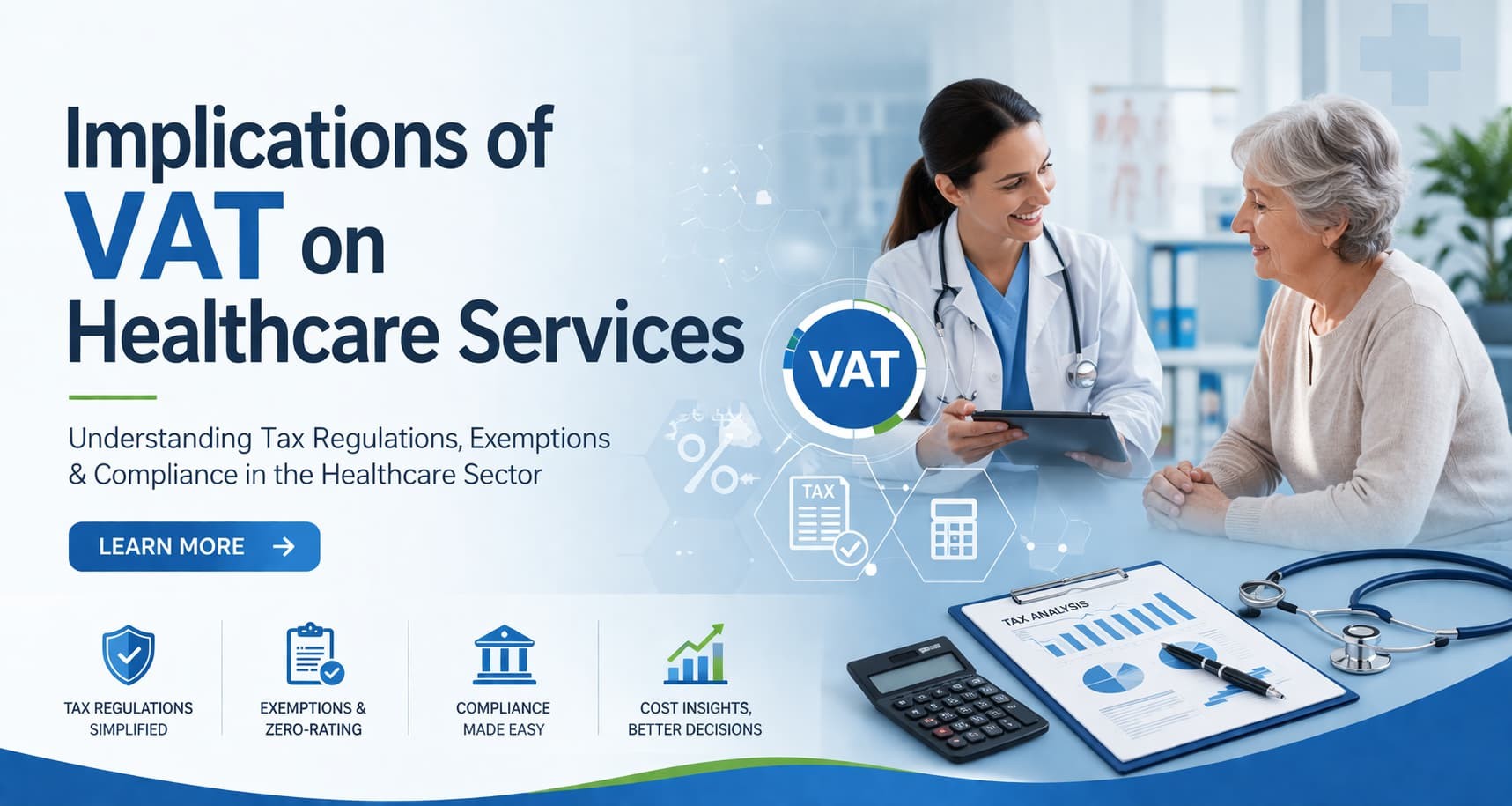
Implications of VAT on Healthcare Services
I’ve spent years helping businesses of all kinds understand their tax obligations. But whenever I talk to my clients who are hospital owners, clinic managers, or health tech startups in the UAE, the conversation begins with the same question -
“Healthcare is essential… So how does VAT even apply to it?”
It is a fair question. Value Added Tax was implemented in the UAE in 2018 with the objective of diversifying government revenue streams while creating a stable economy independent of oil. But healthcare deals with people, not products, therefore, the government created a system in which certain healthcare services are subject to ordinary VAT or exemptions, while many are taxed at 0%.
Why Did the UAE structure VAT This Way?
The UAE currently has 4,000+ healthcare facilities, its healthcare market is also expected to exceed USD 43 billion by 2030. With the rise in hospitals and private clinics, taxation needs a balanced approach. That's why the government introduced VAT.
VAT on Healthcare Services is divided into three main categories within the VAT framework -
Zero-Rated Services
Most core healthcare services in UAE fall under zero-rated VAT. This means VAT is charged at 0% on surgical procedures, diagnostic services, preventive care, medical consultations, dental treatments, etc. Here you can claim back your input VAT. This makes a massive difference on your balance sheet.
Example:
- Any medical treatment approved by the health authorities
- Any specific medicines which are supplied for the medical uses
- Any specific equipment or medical devices used for the treatment
Exempt Services
Some healthcare services are exempt from VAT. This sounds similar to zero-rated services, but its impact is different. When a service is exempt, no VAT is charged to the patient, but the healthcare provider cannot recover input VAT. Here, you don't charge VAT, but the government also says you can't claim back the VAT you pay on your expenses. For healthcare operators, this distinction affects profitability as it can increase operational costs.
Example:
- Primary or essential medical care or services
- Preventive healthcare services
- Inpatient treatment services
Standard-Rated Services (5%)
Not every service offered by a hospital or clinic is medical treatment - if a service is purely elective and aesthetic, it falls under the standard 5% VAT rate. Think cosmetic procedures (Botox for wrinkles, laser hair removal), wellness services, certain aesthetic treatments, sale of non-medical products, hospital room upgrades beyond standard care, etc.
This creates a really interesting split in how clinics operate. If you’re a facility that does both reconstructive surgery (exempt) and cosmetic enhancement (taxable), your accounting system needs to be sophisticated enough to separate those revenue streams. You can’t just lump it all together.
Example:
- Cosmetic surgeries
- Elective treatments
Why Is VAT Compliance Important?
Because VAT can have a number of effects on healthcare companies -
- Procurement decisions
VAT is applied on medical equipment, hospital beds, surgical tools, diagnostic machines, etc. Therefore, healthcare facilities must figure out how to get goods with favourable VAT treatment without sacrificing the quality of patient care.
- Financial planning
VAT can also have an impact on your daily cash flow management and service pricing. Therefore, to avoid making input tax recovery difficult, providers must issue VAT-compliant invoices and file VAT returns in a timely manner.
- Compliance-related risk
Healthcare providers handle hundreds of transactions each month. If they misapply VAT regulations, it can lead to penalties and interest. That's why it is important for them to follow a disciplined approach which includes precise documentation, keeping contracts aligned with VAT guidelines, etc.
- Accurate classification of Items and services
The healthcare service providers must ensure that they are aware of the classification of services, medicines, equipment etc. as per the VAT regime, as the VAT is not universal for all the medical services or medicines hence there is a high chance making errors on applying the VAT charge.
- Real-time update of VAT regime
The services providers must ensure that they keep the updates of the VAT as the rules may get changed and the application of the VAT on the services may differ, hence it’s better to keep a tab on the FTA portal and the VAT updates to ensure the compliance.
Reach Out to VAT Consultants in Dubai Now!
Looking Ahead
The UAE has consistently said that its goal is to conform to international norms. Therefore, the 2026 changes are less about tax increases and more about digitalization and accountability. So, my suggestion to you is to have proper records and keep an eye out on changing tax laws.
CDA: For Your VAT Compliance
In the current scenario, being compliant with the VAT regulations for any registered business is not an option but mandatory. The healthcare sector is a sophisticated and complex area where the service providers and the owners may find themselves in difficult situations pertaining to the application of the VAT and its accounting in the books. For such situations, approaching the experts like CDA can be one of the best options in order to understand the VAT picture and to ensure the compliance while boosting the services. The professional tax team of CDA can assist you with structuring the services as per VAT, charging VAT accurately, filing returns on time, and maintaining all the documents.
To know more about the services, connect to our tax experts now!

Mitesh Maithia
Tax Manager
Mitesh is a Tax Professional with expertise in direct, indirect, and international taxation, including transfer pricing, since 2018. Passionate about making complex tax matters simple, he shares insights to help businesses stay compliant and forward-looking.