
Why IFRS-aligned Financial Statements are Mandatory
Almost every week, clients sit across the table from me and ask, “Why do we need to change our financial statements now? Things were fine earlier.”
I understand where this question comes from. When you are running a fast-paced company in the UAE, the last thing you want to deal with is a new set of complex accounting acronyms. But as a tax expert who has seen the "before and after" of these regulations, I can tell you that IFRS (International Financial Reporting Standards) is no longer just a "nice-to-have" for big corporations. It is now the backbone that supports reliable reporting, faster reviews, and smoother audits.
Why do the Tax Authorities Insist on IFRS?
The Federal Tax Authority (FTA) needs a common language. Imagine if every business in the UAE spoke its own financial dialect - comparing, verifying, and assessing tax would become chaotic. IFRS is a common accounting language. It’s the global standard that ensures a profit of 1 million Dirhams in Abu Dhabi means the same thing as 1 million Dirhams in Dubai or London. This prevents companies from "hiding" expenses or "inflating" income, and for UAE corporate tax, beyond Compliance - IFRS aligned statements lead to -
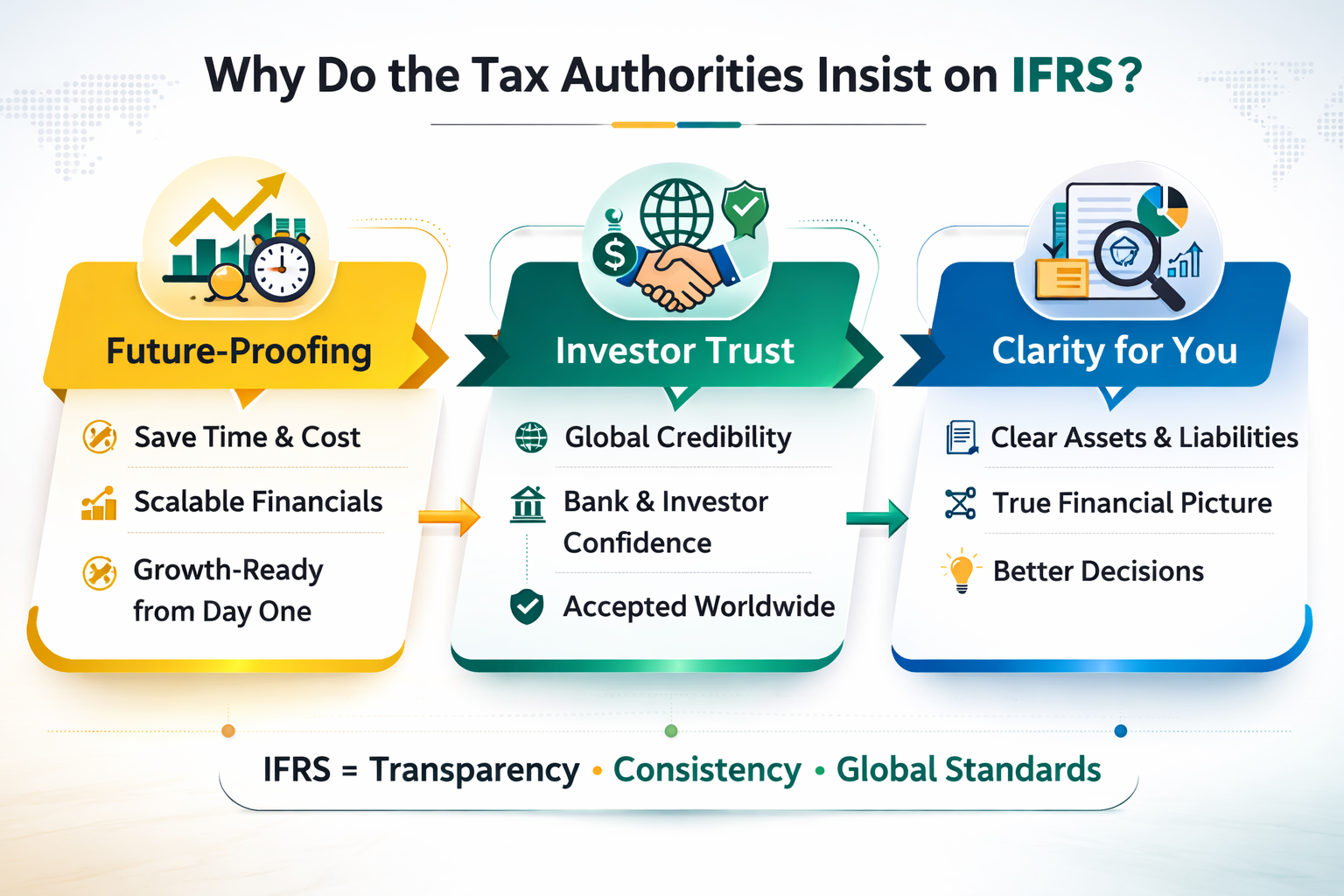
- Future-Proofing: As your business grows, having clean, standardised financials from day one can and will save you immense time and cost.
- Investor Trust: IFRS-compliant statements instantly boost your credibility on a global stage. After all, a potential investor, a bank, an international partner - they all speak IFRS.
- Clarity for You: IFRS forces a rigorous look at your assets, liabilities, and revenue streams. So you’ll understand your business’s true financial position, and that clarity is power.
Thus, by aligning with IFRS, the UAE is telling the world that its economy is mature, regulated, and open for global business.
Your Action Plan
You don’t have to become an IFRS expert overnight. Your role is to have a practical mindset:
- Have the Conversation: Sit with your accountant or auditor. Ask them directly: “Are my annual financial statements prepared in full compliance with IFRS?”
- Understand the Exceptions: There are simplified standards for SMEs (IFRS for SMEs). Check if your business qualifies.
- Acknowledge the Threshold: If your revenue is below AED 3 million, you might be able to use "Cash Basis" accounting. But for everyone else, the Accrual Basis (IFRS) is the way forward.
- Start Now: If you’ve been using another basis, the transition might take time. But aligning your opening balance sheet for corporate tax is crucial. So, make sure your financial statements comply with international financial reporting requirements before the deadline.
If you’re unsure how this applies to your industry or company size, you should start with a gap analysis. This entails comparing your current financial statements to those required by IFRS, identifying major adjustments (i.e., figuring out which areas could have the biggest impact on taxes and disclosures), and creating a transition strategy (i.e., establishing benchmarks and integrating with your audit schedule).
My Advice for You
I have seen businesses face serious repercussions for non-compliance with IFRS standards, which often include monetary fines, license suspensions, damage to one's reputation, etc. consequences like financial penalties, suspension of change licenses, reputational damage, etc. So, if I could sum it up in one line, I’d say: IFRS-aligned financial statements are not only necessary but also serve as a guide for your commercial ventures in the United Arab Emirates. One that guides you toward smoother compliance and trust-based partnerships with financiers.
As a UAE-based business, you must realize that adopting IFRS alignment for CT compliance isn't about following a worldwide norm. It’s about setting up a practical, transparent financial language that everyone, especially the FTA, understands perfectly. So, start by making a step-by-step IFRS compliance checklist tailored to your company's size and industry will help you chart a course that is both strategic and manageable for your business.
How Can our Team Assist You?
Our team of expert accountants and auditors are aware of the IFRS framework hence our team would assist the businesses and the new start-ups to implement the IFRS framework. The experts will provide all the guidance and instruction to the businesses whereby making a smooth transition to the IFRS framework. The businesses can take the personalized services of our team as they will also train and guide the in-house accountants regarding the implementation of the IFRS.
To know more about the services, connect our team now!

Jijo Saji
Senior Auditor
Senior Auditor with over 10 years of experience in auditing, taxation, and financial reporting. Proven expertise in statutory audits, VAT compliance, and advisory services across diverse industries.