
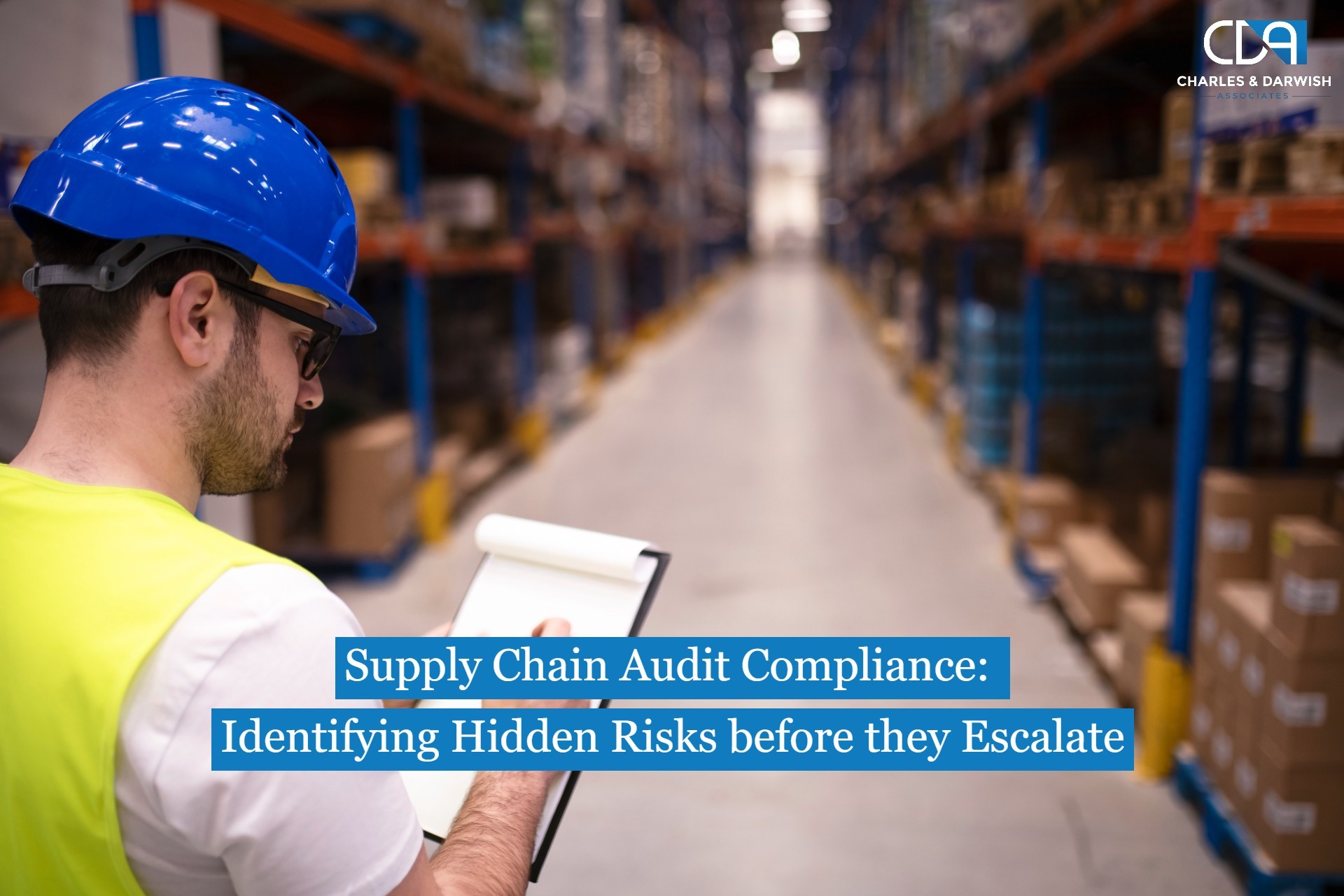
Supply Chain Audit Compliance: Identifying Hidden Risks before they Escalate
I still remember a client who came to me a few days ago, saying, "Our sales are steady, payments are coming in, vendors are working on time, yet profits are decreasing, and we don't know why."
I told him that modern supply chains are very complex. There are multi-layered ecosystems that are shaped by global sourcing, volatile demand, and rising cost pressures. Thus, as your organization grows, inefficiencies might result in low profitability and interrupted service levels. Here, a supply chain audit plays an essential role, as it can bring transparency across processes and systems.
Need for a Supply Chain Audit in UAE
With ports, free zones, and logistical hubs linking Asia, Europe, and Africa, the UAE is at the center of international trade. And as supply chains are stretched across borders, risks like tax errors, vendor non-compliance, incomplete documentation, and overdependence on a single supplier are increasing.
That’s why when I walk a client through an audit, I look for small inconsistencies that have the power to turn into bigger problems. I ask my clients to look for red flags like
- Fragmented Documentation: If a supplier is sending you two to three different versions of an invoice, their internal controls are most likely crumbling.
- The Ghost Employees: When stated headcount of employees and output differ, it's often an indication of illegal labor practices that could eventually destroy your reputation.
Areas to Focus on to Identify Risks Before They Escalate
- Supplier Risk Profile: Examining your supplier's financial health, operational resilience, and governance. Because when vendors’ certifications don’t match their operational reality, it is essential to investigate further.
- Quality and traceability: Inspect how records are kept and how traceability is maintained. This will help you respond quickly when quality issues arise.
- Logistics and customs efficiency: Assess freight routes, carrier reliability, and the speed of customs clearance. This will help you know if there are bottlenecks in inland transport that can increase costs or delay production.
- Data integrity and IT controls: Learn about how the data flows within your company. This is because inconsistent data across systems can make business decisions risky.
- Regulatory alignment: Check if your invoices reflect correct tax treatment, if customs declarations are accurate, and if your cross-border transactions meet applicable standards.
How to Conduct a Supply Chain Audit in UAE: Step-by-Step Guidance
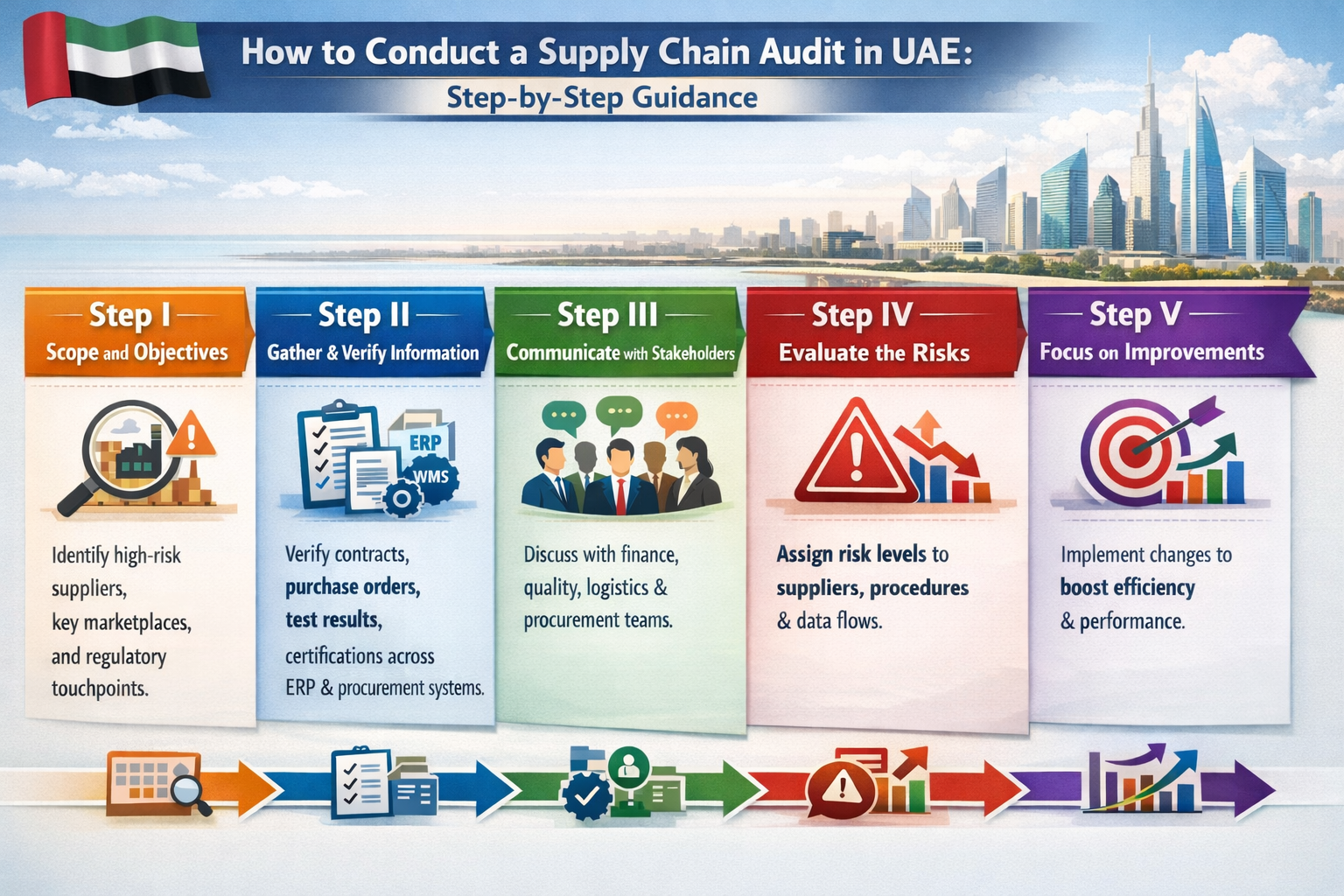
Step I - Scope and objectives
This initial phase entails identifying high-risk suppliers, key marketplaces and regulatory touchpoints.
Step II - Gather and verify information
To confirm that your business data is consistent across ERP, WMS, and procurement systems, you must collect and verify your contracts, purchase orders, test results, certifications, etc.
Step III - Communicate with Your Stakeholders
Discuss with your finance, quality, logistics, and procurement teams the controls as well as all the areas where information can slip through the cracks.
Step IV - Evaluate the risks
Assign risk levels to providers, procedures, and data flows. You must pay close attention to areas where even a small error can lead to a big impact.
Step V - Focus on Improvements
Take actions that align with your operations by focusing on making improvements that will provide you the most benefits.
My Advice
As a tax and compliance expert in the Emirates, I can confidently say that the UAE is no longer a place where you can just succeed with minimal oversight. We are playing on a global stage now, and thus, it is essential to stay ahead of hidden risks and build a resilient supply chain that investors and high-end partners can actually trust. Because when you identify risks early, you don’t just protect your operations - you protect your customers as well as your future.
How Can Our Team Assist You?
Our team of personalized auditors has been providing the auditing services for more than a decade; hence, we assure you that we can solve your supply chain intricacies by conducting stringent audits and detecting the vulnerable areas. The auditors of CDA are well experienced and always ready to provide the best auditing services for the clients. Supply chain audits provided by the team would enable you to ensure adequate use of the resources and to keep a watch on the operations whereby you can detect any loopholes beforehand.
To know more about our auditing services, connect with our team now!