
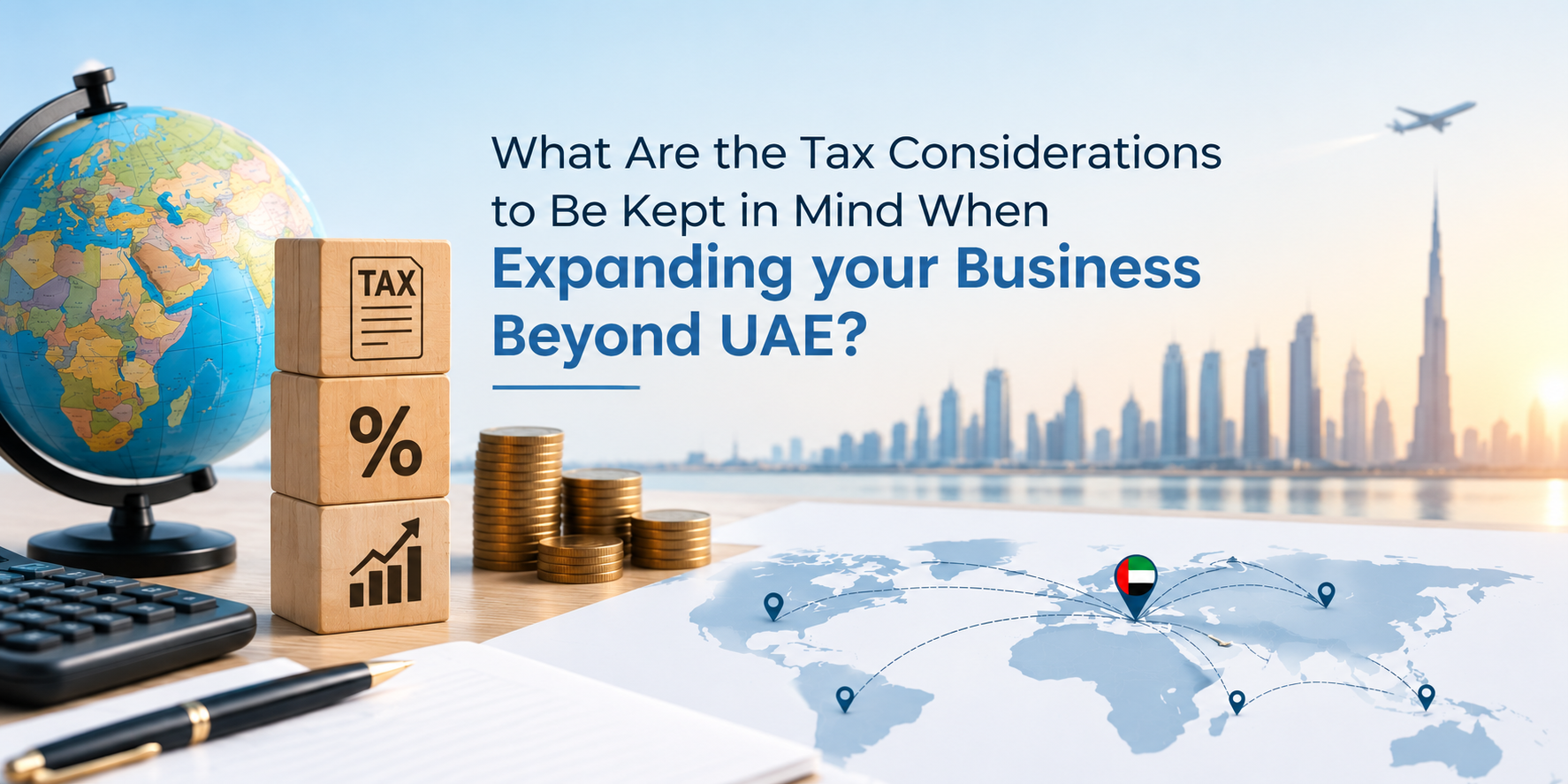
What Are the Tax Considerations to Be Kept in Mind When Expanding your business Beyond UAE?
Expanding a company outside the UAE is a great milestone. The UAE has provided a favourable tax environment for doing business, as it has a lower tax rate and an easy free zone system. However, expanding your business means operating in different and complicated tax environments. Insufficient structural planning during the global rise can result in unexpected tax obligations, double taxation, and large penalties due to the regulations. To ensure your business profits, here are the most critical tax considerations to keep in mind when expanding outside the UAE.
1. The Risk of Forming a Permanent Establishment (PE)
One of the biggest risks of going international is the inadvertent creation of a "permanent establishment" (PE). If you have a PE, you have a place of business in the foreign country, such as a factory, office, or work site for a long-term project, and the country can tax your business profits.
You may not even need to set up a company in that country; hiring employees for longer periods of time or hiring local agents who depend on you to finalize contracts is sufficient to make your business liable for PE. When PE is made, it becomes legally mandatory to allocate part of the profits made by your business to the associated country and pay the corporate tax on that amount according to the laws enforced in that country. Hence the businesses must understand the criteria and the tax regulations related to the PE and structure the businesses accordingly while expanding
2. Differences in Corporate Tax Rates and Filing
While the corporate tax system in the UAE remains simple, many other countries impose much higher corporate tax rates and completely different filing systems. It will be necessary to comply with complicated local regulations that determine what is considered a deductible expense or a taxable income stream. Additionally, tax periods and filing deadlines differ in various parts of the world, meaning that your accounting system will have to reach dual/multiple tax calendars. The businesses must be aware of the tax regulations of the new land and must ensure the adherence to the same in order to avoid any further penalties or fines.
3. Withholding Tax on Repatriation of Profits
When you start making money out of your overseas operations, you will certainly want to repatriate that money to the parent company in the UAE. Here is where the idea of withholding taxes comes in. Many countries impose withholding taxes on dividends, interest or royalties paid to non-resident companies. These taxes are collected before the money leaves the country. It is therefore important to consider these costs at an early stage, as they impact on the net cash flow and repatriation of profits. While planning to expand to new countries the businesses must look into the withholding tax regulations and other related deduction that could possibly affect the profitability of the businesses.
4. Double Taxation Avoidance Agreements (DTAAs)
DTAAs are signed to prevent international companies from paying tax twice on the same income. The UAE has established an extensive web of DTAAs with its global trading partners. When expanding beyond the UAE, it is important to review the DTAAs between the UAE and the target market. This would help you to reduce or eliminate withholding tax, facilitate the profit allocation process for the permanent establishment and get foreign tax credit claims in UAE.
5. Arm's Length Principle and Transfer Pricing
If the UAE parent business has transactions with its new division or subsidiary abroad, the company must follow the rules of transfer pricing. Transactions between related companies should be conducted at arm’s length, i.e., the price should be that which independent parties would charge each other under comparable circumstances. The company also needs to prepare, i.e., proper transfer pricing documentation.
6. Managing Indirect Tax (VAT and Customs Duties)
Corporate tax is important, but companies importing or exporting goods to other parts of the world must also consider indirect tax in various regions, including VAT in Europe, GST in Asia and a range of local sales taxes in the US. One should be aware of the local minimum thresholds for registration, electronic submission of invoices, and customs taxes on exported and imported goods, among other aspects of indirect taxes.
How can CDA assist?
Taking your company to the rest of the world can come with plenty of opportunities for rapid growth and profits, although businesses should be aware of the serious implications of making mistakes in tax compliance due to the way different tax jurisdictions operate. Incorrect international structuring can lead to serious repercussions like heavy penalties from tax authorities, double taxation of income, or frozen capital. Before you go international, partner up with CDA’s international tax experts. Experts at CDA will help you improve efficient cross-border structures and the efficient management of tax compliance issues.
Contact CDA today and develop an effective plan to take your business beyond UAE.

Mitesh Maithia
Tax Manager
Mitesh is a Tax Professional with expertise in direct, indirect, and international taxation, including transfer pricing, since 2018. Passionate about making complex tax matters simple, he shares insights to help businesses stay compliant and forward-looking.