
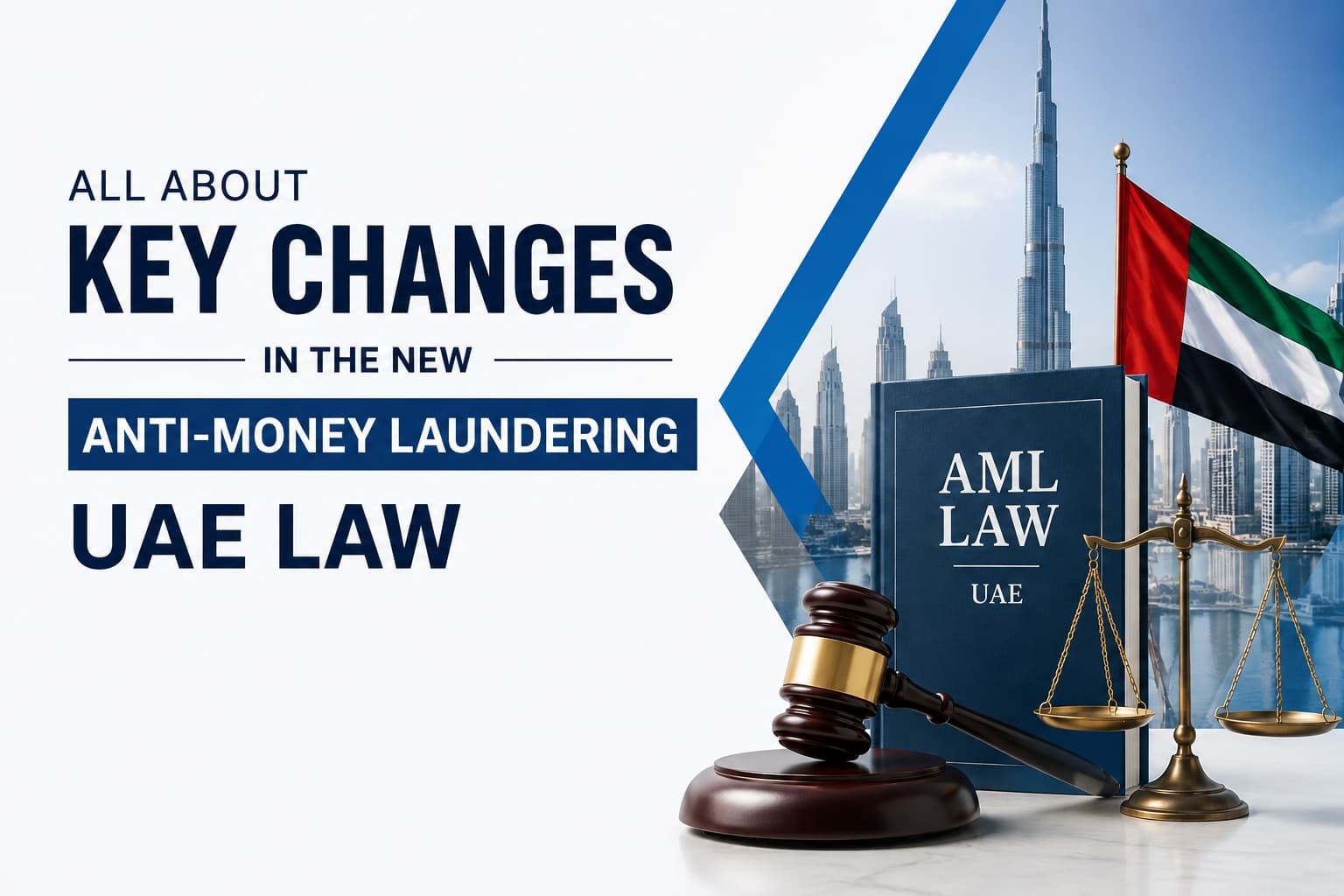
All About Key Changes in the New Anti-Money Laundering UAE Law
If you are a business operating in the UAE, then it is important to know the new changes and updates that have been made in the AML-CFT laws in the UAE. Never as before now it has become mandatory for the businesses in the UAE to comply with the AML-CFT laws and to ensure that a strict framework is implemented to detect any such money laundering and terrorist financing instances in the businesses.
We could see now how the banks are performing more detailed customer due diligence and now monitoring all the transactions that are taking place by the businesses. If there are any anomalies detected, then that would result in more scrutiny, and maybe an investigation could be carried out to trace any money-laundering activities.
What Are Businesses Expected to Do as Part of AML Compliance?
Businesses in the UAE now must ensure that the AML laws are followed and should implement the following:
- Should understand and evaluate the business’ risk exposure to money laundering activities
- Understand and conduct a thorough due diligence of the customers the business is dealing with.
- Should ensure that each and every transaction makes sense.
- Maintain accurate and updated ultimate beneficiary and ownership documents.
- Should be proactive if any susceptible transactions are detected.
What Are The Key Changes Under UAE-AML Law in 2026?
There are some major updates that have been implemented under the AML law in the UAE, and the businesses must ensure that they are aware of these updates, and non-compliance with these would result in legal issues, fines, and penalties. Some of the updates include the following:
- Objective test for criminal liability: Now the businesses must understand how the knowledge of any of the money-laundering activity is assessed by the authorities. As per the initial AML laws, the authorities were required to prove based on the evidence if the business knew regarding the illicit transactions. As per the recent change, the criminal liability would be assessed based on the circumstances. The business would have the criminal liability as if the competent professional in the same position had sufficient grounds to believe that the business had failed to act even after suspecting the money laundering.
- Proliferation financing: As per the new change in the AML law, now the proliferation financing is also now included as a major illegal activity along with the money laundering activities. For businesses dealing with any kind of trade, imports, exports, or manufacturing activities, it is expected that the business will investigate and assess if the funds or the goods or services are related to any kind of illicit activities.
- Digital assets: If the business deals with crypto assets or any kind of virtual assets, then they must be aware of the recent updates in the law, as if the virtual assets are used for any of the illicit activities or to conceal any such funds, then it would be considered a money laundering activity.
- Personal accountability: If there were any money laundering activities detected, then now it would not be considered a business liability itself; the individuals would also have accountability. The managing directors, owners, senior managers, etc. would be considered personally liable if the money laundering activities are ignored or no proper controls are implemented. The law expects related personnel of the business to be vigilant and to take related measures if any anomalies are detected.
- High penalties: The result of non-compliance would be costly now. As per the new law, the fines could go up to AED 100 million for the corporate organization. The consequences would further include:
- Imprisonment
- Suspension of business or trading license
- Loss of goodwill and confidence of stakeholders
- Could also lead to dissolution of the business
- More power to authorities: The Financial Intelligence Unit of the UAE is now given more power as a result; now the authorities can:
- Freeze the assets of the business.
- Can request more detailed documents and also across the borders
- Review the old transactions.
You can also read: Important Anti-Money Laundering Terms
What Can Businesses Do To Be Ready for These Changes?
The businesses are not expected to conduct a complete overhaul of the AML framework within a short span of time, but gradually the businesses should ensure the following to stay compliant:
- Conduct a thorough review of the AML-CFT policies
- Ensure thorough customer due diligence
- Detect and investigate the high-risk clients.
- Implemented internal AML personnel.
- Train the staff about the recent changes.
These are some of the easy steps that the businesses can implement to ensure compliance with the new updated AML law.
You can also refer: How to Implement An Effective AML-CFT Framework For Your Business in UAE?
How Can CDA Help to Ensure AML Compliance?
For the businesses in the UAE, it is mandatory to ensure that they are in line with the laws being implemented. AML law is one such law that the businesses are expected to comply with. The experts like CDA can assist the businesses in the UAE to ensure compliance regarding the AML laws, as they are well aware of the recent changes; hence, businesses need not to hassle with the AML compliance matters. Our professional team is always ready to provide personalized AML assistance to the businesses. To know more about the services, connect with the team now!

Mitesh Maithia
Tax Manager
Mitesh is a Tax Professional with expertise in direct, indirect, and international taxation, including transfer pricing, since 2018. Passionate about making complex tax matters simple, he shares insights to help businesses stay compliant and forward-looking.