
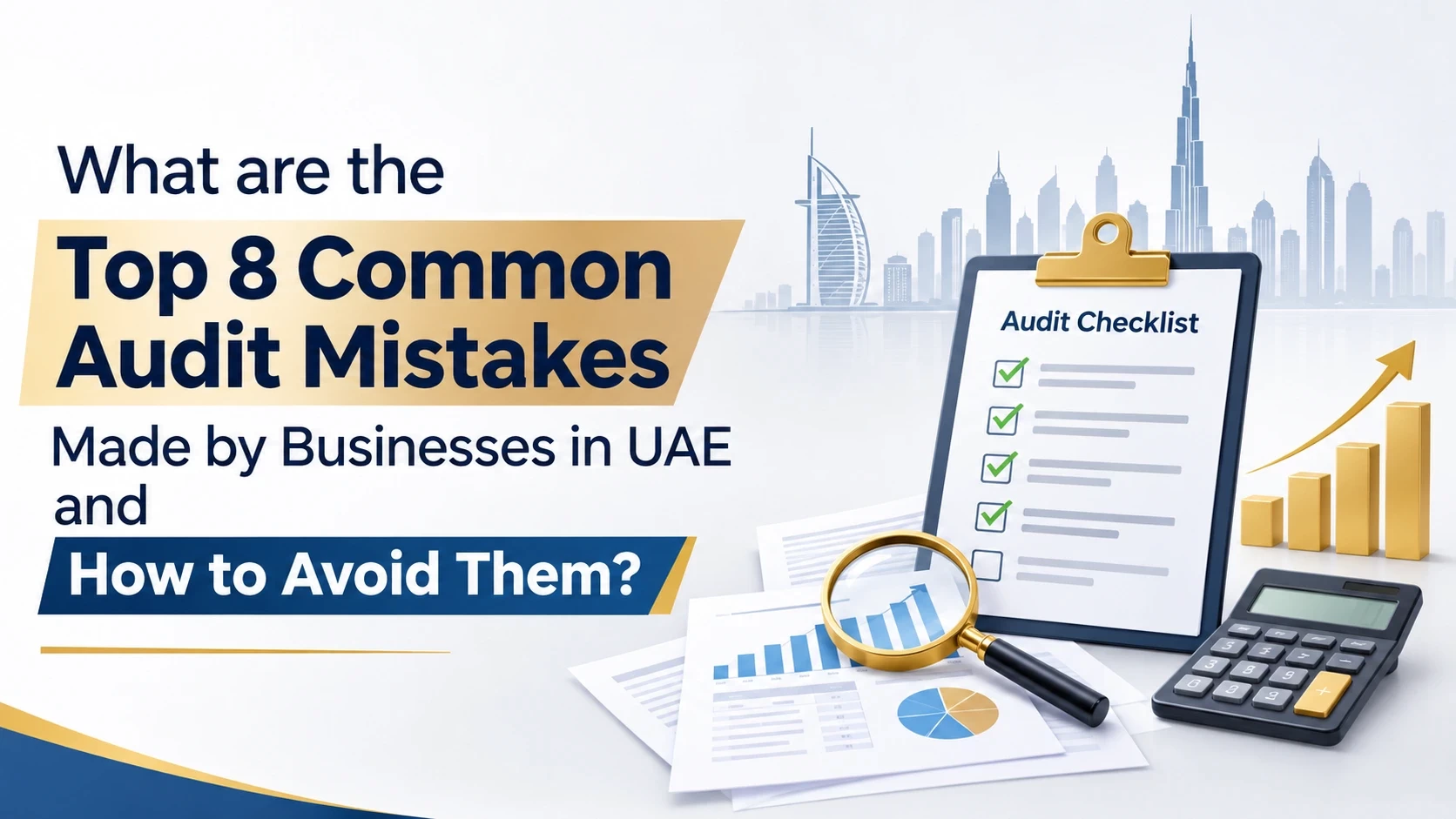
Top 8 Common Audit Mistakes Made by Businesses in UAE
The preparation for the annual financial audit in the UAE has evolved from a routine end-of-year job to a serious obligation. This is due to the introduction of the UAE corporate tax regulations and free zone authorities demanding businesses’ audited reports to be given their licenses and tax-related perks.
Minor bookkeeping errors that happen throughout the year cause many businesses unnecessary problems, pay higher audit fees, and cause delays in processes. In this blog, we will look at the 8 most common auditing mistakes made by businesses in the UAE and how to avoid them.
The Importance of Annual Audits in 2026
As per the UAE Corporate Tax guidelines and Free Zone conditions (for instance DMCC, JAFZA, DIFC, and ADGM), timely submission of audited financial statements is of utmost importance to:
- Renew your trading license without any hold-ups or penalties.
- Maintain the 0% corporate tax status of your company operating in the Free Zone (any business registered as a Qualifying Free Zone Person must submit the audited financial statements regardless of its revenue).
- Reliable compliance with financial institutions to obtain loans, credit facilities, and new partnerships.
Top 8 Common Mistakes and How to Avoid Them
1. Improper Bank Statements & Accounting Records
The Mistake: The practice of backdating annual bank statements to accounting software creates problems with differences in bank deposits and pending receipts and uncashed checks.
How to Avoid It: Reconcile bank statements, corporate credit cards and petty cash with the accounting records every month.
2. Missing Receipts, Invoices, and Contracts
The Mistake: Failure to secure the invoice in the case of a sales transaction. In such an event the auditors will not be able to approve these numbers, as they will not have any confirmation.
How to Avoid It: Ensure you have reasonable digital files that verify every invoice, receipt, and contract in an orderly monthly folder.
3. Failure to Calculate Payments at Year-End
The Mistake: Neglecting payments of electricity and phone bills of December, which remain unpaid until January. Not calculating the payment that should be paid for the gratuity of an employee when his/her employment is terminated.
How to Avoid It: Make sure you record all your year-end payments in the right period and calculate the gratuity of your employees as per the UAE labour law.
4. Lists of Outdated Equipment
The Mistake: Maintaining a list of assets which contains outdated machines/vehicles or sold-out machines/vehicles or having underestimated inventories at the end of the year.
How to Avoid It: Always update the list of your assets whenever there is any purchase or sale of assets. At the end of the financial year, always take a stock of the values of spoiled or outdated goods.
5. Mismatches between Tax Returns and Financial Records
The Mistake: Having revenues or expenses figures that appear in the VAT tax returns differ from the numbers contained in the yearly financial statements. Such disparity raises a big alarm for the auditors and FTA.
How to Avoid It: Match the quarterly VAT returns and corporate tax calculations with the accounting books before giving the documents to the auditors. Any discrepancies should be corrected and explained as early as possible.
6. Combining Personal and Business Expenditures
The Mistake: Paying for shopping, vacation trips, and non-business costs related to meals using the business credit card and treating them as business costs.
How to Avoid It: Make sure that your personal cost and business cost do not get mixed up; in case a personal cost is incurred in the business, the same needs to be recorded under the personal account.
7. Untracked Receivables and Payables
The Mistake: Failing to look at customer balances and supplier invoices that have gone unpaid in the accounts for a long period of time.
How to Avoid It: At least every three months review your accounts receivable and accounts payable. Before the audit begins, get up to date on overdue invoices, clean up duplicate entries and write off known bad debts.
8. Choosing an Unapproved Auditor at the Last Minute
The Mistake: Choosing an auditor at the last minute, or choosing a company not approved by your free zone regulator or the UAE Ministry of Finance, or delaying the appointment process.
How to avoid it: Hire an accountant and an auditor approved by your free zone authority. Make sure you do this at least two to three months before the end of your accounting year so that the auditor has time to audit your accounts and help you.
Conclusion
An effective annual audit results from proper and systematic bookkeeping throughout the year. By avoiding the major mistakes of improper receipts management, erroneous bank statements, and tax return discrepancies, businesses can cut the time needed for an audit, avoid any penalties, and ensure full compliance with the UAE authorities.
How Can CDA Assist?
Need special assistance with preparing your account for the audit? CDA is an authorized accounting and tax consultancy firm in the UAE. We can help you analyse your financial data and correct any missing entries in your books and verify whether there have been any VAT or corporate taxes paid.
Contact the professionals at CDA and hire us today!